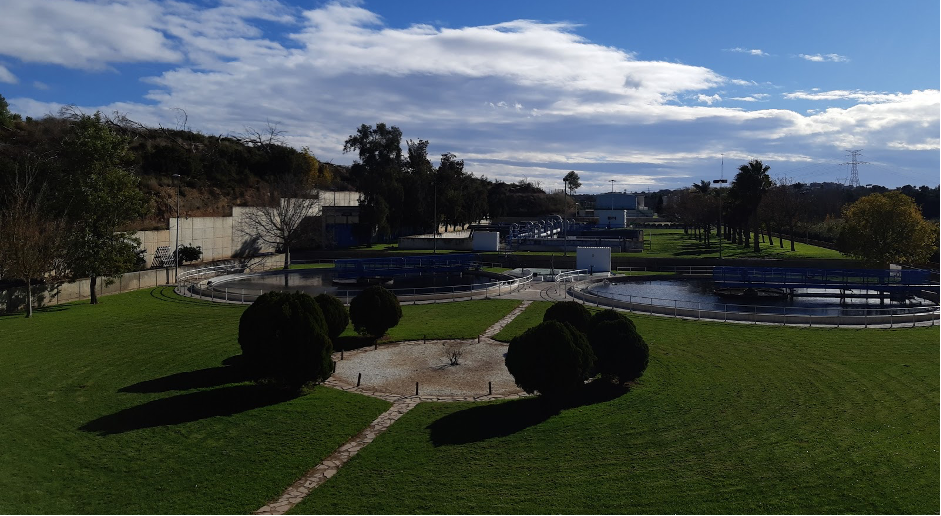
Verification phase

Did the solution work? Was the impact reduced?
Odour impact was significantly reduced and complaints stopped.

How was the effectiveness of the applied solution monitored?
Campaigns were carried out to measure H2S in the area where odour complaints were recorded and regular controls of H2S, VOCs, ammonia, mercaptans and amines are carried out throughout the plant in order to detect sources not previously considered.

Communication phase

Was the public properly informed about the end of the process?
Meetings were held with the neighbours' association and the city council to verify the absence of complaints and to report on all actions taken.

In this way, direct and fluid communication was established between the local authorities and the WWTP, minimising the response time to any incident detected and increasing the confidence of the residents in the continuous implementation of good practices aimed at reducing and even eliminating the impact of odours from our facilities. This direct and fluid communication is still maintained today.

What was the outcome of the data analysis?
The administration commissioned a project that included a series of actions aimed at minimising the impact of odours from the WWTP. The work was put out to tender and all the actions were carried out.
Bulgarian BG Catalan CA English EN French FR German DE Greek EL Italian IT Portuguese PT Spanish ES
Adsorption | Odour Observatory

Adsorption

What is it?

Adsorption is a heterogeneous reaction in which gas molecules are retained on a solid or liquid surface (adsorbent also referred to as a molecular sieve) that prefers specific compounds to others and thus removes them from effluent streams (Figure 1). When the surface has adsorbed as much as it can, the adsorbed content is desorbed as part of the regeneration of the adsorbent. When desorbed, the contaminants are usually at a higher concentration and can either be recovered or disposed of.

Typical adsorbents include (EIPPCB; 2016):
  • granular activated carbon (GAC), the most common adsorbent with a wide efficiency range and not restricted to polar or non-polar compounds; GAC can be impregnated, e.g. with oxidants such as potassium permanganate;
  • zeolites, properties depending on their manufacturing, working either as mere molecular sieves, selective ion exchangers or hydrophobic VOC adsorbers;
  • macroporous polymer particles, which are used as granules or beads, without being highly selective with respect to VOCs;
  • silica gel;
  • sodium-aluminium silicates.

Major types of adsorption systems are:
  • fixed-bed adsorption;
  • fluidised-bed adsorption;
  • continuous moving-bed adsorption;
  • pressure swing adsorption (PSA).
The most common adsorption systems for odour control are fixed-beds (Figure 2).

Design, maintenance and efficiency

Since all adsorption processes are exothermic, they cause a temperature rise, which is not desirable for the adsorption of organic compounds. Carbon or metals on GAC as well as zeolites can catalyse the oxidation of some compounds when the adsorbent is hot, resulting in bed fires that also consume part or all of the GAC, but not the zeolite. This is a hazard when adsorbing certain hydrocarbons (such as ketones or comparable active compounds) at ambient temperatures that are close to those that cause the organic compound to oxidise. Such a GAC bed fire can either alter the pore size of the remainder of the bed, or oxidise the bed to ash, which is a serious incident that may burn down the whole facility. These fires may be suppressed by humidification of the air and by intentional cooling of the GAC.

Temperature monitoring of the gas outlet of the GAC adsorber is required to prevent fire risk. Another important measurement is the pressure drop across the adsorbent bed. Across the bed, the pressure should remain roughly constant. There should be an alarm for high pressure.

Applicability

Table 1 shows application limits and restrictions associated with adsorption (adapted from EIPPCB, 2016, Table 3.166).

Table 1. Application limits and restrictions associated with adsorption.
Issue GAC Zeolites
Gas flow (Nm3/h) 100-100000 <100000
Temperature (°C) 15-80 (ideally about 20) <250
Pressure (MPa) 0.1-2 Atmospheric
Pressure drop (mbar) 10 to 50 NI
Odour concentration (ouE/m3) 5000-100000 NI
Dust content (mg/Nm3) Low concentration to prevent obstruction Low concentration to prevent obstruction
Relative humidity of the waste gas max 70% NI
NI = no information available

References

EIPPCB (2016). Best Available Techniques (BAT) Reference Document for Common Waste Water and Waste Gas Treatment/Management Systems in the Chemical Sector. JRC Science for Policy Report.
Bulgarian BG Catalan CA English EN French FR German DE Greek EL Italian IT Portuguese PT Spanish ES